Whether you are seeking a bold morning brew or a delicate evening sip, understanding the different types of tea and their unique tea flavors is the secret to elevating your tea-drinking experience. Every authentic tea variant originates from the leaves of a single plant species—Camellia sinensis. The dramatic differences in taste, aroma, color, and strength come down to one crucial step: how the tea leaves are processed, oxidized, and dried.
In this definitive guide, we break down the core tea categories, explore their flavor chemistry, and highlight the best types of green tea and herbal infusions to help you discover your ideal cup.
Quick Takeaway: More oxidation equals darker, bolder, and maltier tea flavors (like Black Tea). Less oxidation preserves fresh, grassy, and sweet notes (like White and Green Tea).
Types of Tea Flavors: Discover the Six Core Tea Categories Defined by Processing Methods
In the world of tea, the six main categories—black, green, white, oolong, pu-erh, and herbal/wellness—represent a fascinating spectrum of flavors and aromas. However, understanding how these flavors diverge requires more than just surface knowledge. The processing steps, such as oxidation percentages, fermentation techniques, and drying methods, play a pivotal role in shaping the flavor profiles of each tea.
This guide will provide an organized taxonomy that matches each tea type with its predominant processing techniques, making it easier to grasp why certain flavors arise. Each category will include a brief flavor signature, enabling you to identify the perfect tea for your palate. Additionally, we’ll link you to product pages where you can explore each type further and discover specific brewing tips that enhance your tea experience. Get ready to deepen your understanding of tea flavors and find the perfect blend for your next cup.
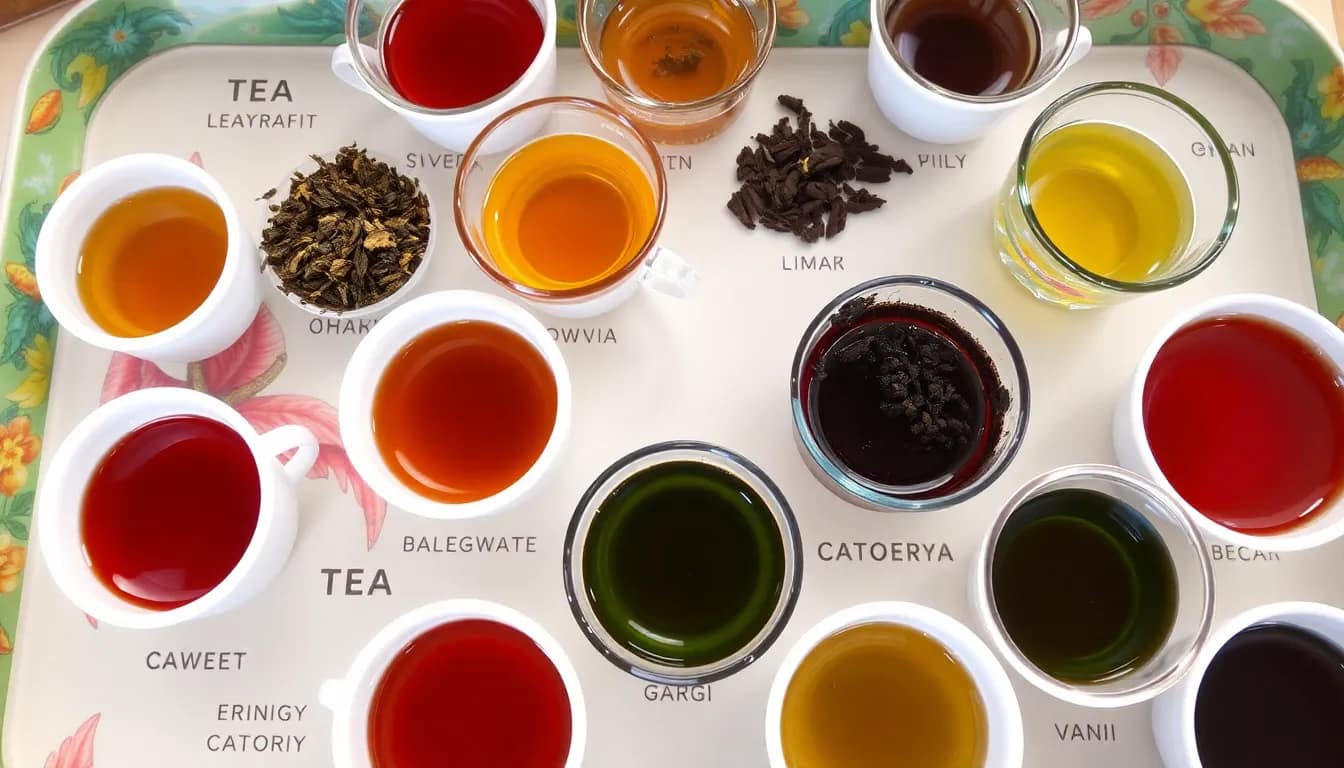
Comprehensive Guide to Tea Types
Understanding the six core categories clarifies the journey from leaf to cup. The types of tea flavors you encounter come from distinct processing steps that shape aroma, body, and finish. This guide maps those paths and shows how oxidation, fermentation, and drying drive each profile.
What you’ll get here:
- A clean taxonomy that pairs category with its main processing method
- Quick taste notes you can trust in a moment
- A path to deeper dives on brewing, origins, and Tea Art blends
Below, the quick-reference table anchors the overview. Then we drill into each type with a flavor-chemistry lens and a practical brewing nudge.
The 6 Core Tea Categories at a Glance
| Tea Category | Processing & Oxidation Level | Predominant Flavor Signature | Typical Caffeine Content |
| Black Tea | Fully Oxidized (100%) | Robust, malty, brisk, cocoa, smoky | High (40–70 mg) |
| Green Tea | Unoxidized (0–10%) | Fresh, vegetal, grassy, umami, sweet | Moderate (20–45 mg) |
| Oolong Tea | Partially Oxidized (20–80%) | Floral, creamy, peachy, toasted, complex | Moderate (30–50 mg) |
| White Tea | Minimal Processing (0–5%) | Delicate, subtle, honeyed, floral | Low (15–30 mg) |
| Pu-erh Tea | Post-Fermented / Aged | Earthy, rich, woody, mellow, smooth | Moderate (30–100 mg) |
| Herbal / Wellness | Infusion (0% Camellia) | Citrus, minty, spicy, floral, sweet | Caffeine-Free (0 mg) |
Exploring the Flavor Profiles of True Teas
1. Black Tea: Bold, Malty, and Brisk
Black tea leaves undergo complete oxidation before being dried, turning the leaves dark brown or black. This process converts basic catechins into theaflavins and thearubigins, which supply black tea’s characteristic briskness, body, and deep amber hue.
Flavor Profile: Malt, dark cocoa, dried fruit, wood, and subtle astringency.
Popular Varieties: Assam, Darjeeling, Ceylon, Earl Grey.
Best For: A bold morning wake-up or afternoon tea paired with milk.
Explore Pure Single-Origin Teas: Discover our handpicked best Assam tea options and authentic Darjeeling first flush tea.
2. Green Tea: Fresh, Vegetal, and Antioxidant-Rich
Green tea leaves are steamed or pan-fired immediately after harvesting to stop oxidation completely. This preserves high levels of epigallocatechin gallate (EGCG) and L-theanine.
Flavor Profile: Freshly cut grass, steamed spinach, seaweed, sweet corn, and light floral notes.
Popular Varieties: Sencha, Matcha, Dragon Well (Longjing), Jasmine Green Tea.
Best For: Clean daily energy, focus, and antioxidant support.
Explore Pure Green Teas: Learn how to pick premium leaves in our comprehensive green tea varieties guide or browse our loose leaf tea guide.
3. Oolong Tea: Floral, Creamy, and Layered
Oolong sits artfully between green and black tea. Master tea artisans repeatedly wither, toss, and roll the leaves to achieve partial oxidation, producing intricate flavor layers that shift across multiple brewings.
Flavor Profile: Orchid, roasted butter, ripe peach, cream, and honey.
Popular Varieties: Tieguanyin (Iron Goddess of Mercy), Da Hong Pao, Milk Oolong.
Best For: Mindful sipping sessions and sensory exploration.
Read More: Dive into our specialized oolong tea flavor guide or compare oolong tea vs green tea.
4. White Tea: Delicate, Sweet, and Pristine
White tea is the least processed of all true teas, made using only young, unopened buds and tender top leaves covered in silken white hairs. Leaves are simply withered in sunlight and gently dried.
Flavor Profile: Delicate honeysuckle, melon, sweet hay, and soft floral undertones.
Popular Varieties: Silver Needle (Yinzhen), Peony White Tea (Bai Mu Dan).
Best For: Peaceful evening relaxation or warm-weather sipping.
Discover White Teas: Read about the subtle notes in our delicate flavors of Peony White Tea and explore our white tea price guide.
5. Pu-erh Tea: Earthy, Mellow, and Aged
Originating in Yunnan Province, China, Pu-erh undergoes microbial post-fermentation after drying. Like fine wine, Pu-erh improves with age, smoothing out harsh tannins into a rich, complex brew.
Flavor Profile: Moist forest floor, damp bark, dark chocolate, leather, and sweet autumn leaves.
Popular Varieties: Raw Pu-erh (Sheng), Ripe Pu-erh (Shou).
Best For: Post-heavy-meal digestion and earthy tea lovers.
Best Types of Green Tea Ranked by Flavor and Use
Because green tea is one of the most widely searched categories globally, finding the right variant for your taste buds depends on how the leaves were crafted:
| Green Tea Type | Processing Method | Flavor Profile | Ideal Drinking Occasion |
|---|---|---|---|
| Sencha | Japanese Steamed | Grassy, ocean air, crisp | Daily morning focus |
| Matcha | Shaded Ground Powder | Umami, rich, sweet grass | Workouts & latte recipes |
| Jasmine Green | Scented with Flowers | Sweet floral, aromatic | Afternoon stress relief |
| Dragon Well | Chinese Pan-Fired | Nutty, toasted chestnut | Calm mid-day sipping |
| Kahwa / Spiced | Blended with Spices | Warming, cardamom, nut | Daily digestive wellness |
Flavor Chemistry of Each Tea Type
For Everyday Sips: Choose a light, balanced leaf like our recommended picks in the best green tea for daily drinking guide.
For Maximum Antioxidants: Powdered and high-grade spring harvests offer peak polyphenols. See our breakdown on best green tea for antioxidants.
For Convenience: If you prefer easy brewing on the go, check out our best green tea bags or convenient green tea sachets options.
- Black tea chemistry centers on oxidation driven polymerization. Theaflavins boost briskness; thearubigins add depth and a malty edge. A cup like a classic Assam Black often tastes bold and rounded.
- Green tea relies on catechins such as EGCG and theanine. These compounds deliver a clean, fresh bite with a gentle sweetness. You’ll notice grassy, sea‑air notes in many Chinese and Japanese greens. Theanine contributes a calm, balanced mouthfeel, especially in lower‑tired brews.
- Oolong sits between green and black in chemistry. Partial oxidation preserves floral terpenes while lactones develop creamy textures. This yields a bouquet that can feel fragrant yet smooth, with a lasting aftertaste.
- White tea’s minimal processing leaves behind simple, bright catechin chemistry. The result is a light, sweet cup with delicate fruit or honey hints, depending on cultivar and harvest.
- Pu-erh brings unique fermentation‑driven compounds from microbial action. Its earthy, mossy or mineral notes deepen with aging, while fresh batches feel vibrant and clean.
- Herbal/Wellness blends owe their flavor variety to essential oils, citrus peels, spices, and fruit pieces. Terpenes, carvone, limonene, and other volatiles mingle to create citrusy, cooling, or resinous experiences.
For deeper dives into each type, plus pairing ideas and brewing notes, browse related guides and product pages via Tea Art’s hub.
Culminating thought: the six core types of tea flavors map a clear path from leaf handling to cup character. By recognizing where a tea sits in oxidation or fermentation, you can quickly anticipate taste, adjust brew, and find the perfect match in Tea Art’s range.
Herbal Teas & Wellness Blends (Botanical Tisanes)
While commonly called “tea,” herbal infusions contain no Camellia sinensis leaves and are naturally 100% caffeine-free. They blend roots, dried flowers, fruit peels, and culinary spices.
Floral Tisanes (Chamomile, Hibiscus, Rose): Calm nervous tension and deliver bright ruby tartness or soothing aromas.
Spiced & Adaptogenic Blends (Tulsi, Cinnamon, Ginger): Enhance circulation, aid digestion, and boost daily immunity.
Cooling Herbs (Mint, Lemongrass): Palate cleansers ideal after heavy meals.
Explore our dedicated curated lists for caffeine-free herbal tea options, relaxing teas that help you sleep, and herbal best detox and cleanse tea recipes.
The Science of Tea Flavors: How Leaf Chemical Changes Create Taste
The flavor matrix of every tea cup is governed by three natural chemical compound groups:
Harvested Green Leaf
  │
  ├─► Polyphenols (Catechins / EGCG) ───► Unoxidized = Fresh, grassy, bitter-sweet bite (Green/White Tea)
  │
  ├─► Enzymes + Oxygen (Oxidation) ───► Form Theaflavins & Thearubigins = Malty, rich, red-brown cup (Black Tea)
  │
  └─► Volatile Essential Oils & Terpenes ──► Partial Rolling/Firing = Orchid, creamy, fruit bouquet (Oolong Tea)
Catechins (Polyphenols): Responsible for the clean, astringent bite in green and white teas.
Theaflavins & Thearubigins: Formed during oxidation in black teas, creating brisk warmth, deep color, and rich mouthfeel.
L-Theanine: An amino acid that adds a smooth, calm “umami” sweetness and counters caffeine jitters.
Terpenes & Essential Oils: Released during withering and roasting to create floral, peachy, or toasted notes.
Final Insights on Types of Tea Flavors
Understanding the types of tea flavors helps you map leaf to cup with confidence. Flavors arise from six core tea types plus herbal blends, each shaped by a distinct processing path. Oxidation, fermentation and drying set the palate, color, and finish. With this framework you can predict how a tea will taste and how to brew it for best effect.
Quick orientation you can rely on:
- Black tea has full oxidation, delivering robust, malty, astringent notes.
- Green tea stays lightly oxidized, offering fresh, vegetal, sweet tones.
- Oolong sits in between, with floral, creamy, complex flavors.
- White tea remains barely processed, prized for delicate, sweet, subtle hints.
- Pu-erh features post fermentation, giving earthy, rich, mellow character.
- Herbal/Wellness blends are not Camellia sinensis leaves; flavors vary widely by ingredient.
Flavor chemistry matters too. The biggest shifts come from polyphenols and aroma compounds that form during processing. Theaflavins and thearubigins in black teas sharpen the bite; catechins in green teas supply crispness; terpenes in oolongs craft that fragrant lift; aging compounds in pu-erh mellow the cup over time.
How to Match Tea Flavors to Your Mood and Daily Routine
If you aren’t sure which tea variety to try next, use this quick selector:
Need Morning Focus without Jitters? Sip an invigorating premium loose leaf green tea or a bold masala chai tea bag.
Seeking Post-Meal Digestive Comfort? Choose a warm, aromatic brew like Kahwa green tea benefits or green tea for digestion.
Unwinding After a Long Work Day? Reach for an elegant, low-caffeine white tea or a calming caffeine-free herbal tea.
Looking for Healthy Weight Management Support? Explore our guide on green tea for weight loss.
Final thought: these six core categories form a practical map for selecting, brewing, and enjoying a wide range of flavors. Use the framework to guide curiosity, then let your palate confirm the best match for the moment.
Frequently Asked Questions About Tea Types & Flavors
1. What are the 6 main types of tea?
The six true types of tea derived from Camellia sinensis are Black Tea, Green Tea, Oolong Tea, White Tea, Pu-erh Tea, and Yellow Tea. Herbal infusions (tisanes) form a separate, caffeine-free botanical category.
2. What are the best types of green tea for beginners?
For beginners, Jasmine Green Tea offers a sweet, fragrant floral entry point. Sencha provides a classic crisp green tea experience, while Dragon Well gives a smooth, toasted, nutty flavor with zero bitter edge.
3. Which type of tea has the most caffeine?
Generally, Black Tea and Pu-erh Tea contain the highest caffeine per cup (40–70+ mg), while White Tea and Green Tea have lower caffeine levels (15–45 mg). However, water temperature and steep time also play significant roles.
4. How does processing change tea flavor?
Oxidation is the primary factor. Unoxidized leaves retain grassiness and high antioxidants (Green Tea). Partial oxidation develops complex floral and creamy notes (Oolong Tea). Full oxidation creates deep, malty, cocoa-like notes (Black Tea).
5. Where can I explore premium tea varieties in India?
You can browse single-origin leaves, wellness blends, and tea bags directly at the Tea Art Online Shop or explore our full library of Tea Art Guides.
What are the main types of tea?
Think of six families plus a herbal category. The six true tea types are black, green, white, oolong, pu-erh and herbal/wellness blends. Each comes from Camellia sinensis or, in the case of herbal blends, botanicals and fruit. A simple rule of thumb: more oxidation equals bolder, darker flavors; less oxidation yields lighter, fresher notes.
How does processing affect tea flavor?
Processing decides how flavors form. Oxidation level, fermentation, rolling and drying steer aroma compounds and color. Full oxidation makes black teas brisk and malted. Light oxidation keeps greens bright and grassy. Partial oxidation creates the layered profiles of oolongs. Drying and aging bring complexity to whites and pu-erh.
What defines herbal teas and wellness blends?
Herbal infusions use plants beyond Camellia sinensis. They range from chamomile and peppermint to hibiscus and fruit blends. Caffeine content varies or is absent, depending on ingredients. Wellness blends add roots, spices or botanicals for targeted flavors and effects.
Do all herbal blends taste different in caffeine content?
Herbal blends are usually caffeine free, though a few ingredients can add a kick. If caffeine matters, check the blend notes or ask about specific ingredients.
How can I use flavor notes to pick a tea?
Match notes to mood and time of day. Want freshness and a quick lift? Green tea or a light oolong fits. After a hearty meal, a robust black or a pu-erh can feel satisfying. For calm moments, a soft white or gentle herbal blend often works best.
A well‑chosen tea flavor map helps you move from curiosity to a satisfying cup, every time.